Amazing grace! How sweet the sound
That saved a wretch like me!
I once was lost, but now am found;
Was blind, but now I see.
’Twas grace that taught my heart to fear,
And grace my fears relieved;
How precious did that grace appear
The hour I first believed.
Through many dangers, toils, and snares,
I have already come;
’Tis grace hath brought me safe thus far,
And grace will lead me home.
The Lord has promised good to me,
His Word my hope secures;
He will my Shield and Portion be,
As long as life endures.
Yea, when this flesh and heart shall fail,
And mortal life shall cease,
I shall possess, within the veil,
A life of joy and peace.
The earth shall soon dissolve like snow,
The sun forbear to shine;
But God, who called me here below,
Will be forever mine.
When we’ve been there ten thousand years,
Bright shining as the sun,
We’ve no less days to sing God’s praise
Than when we’d first begun.
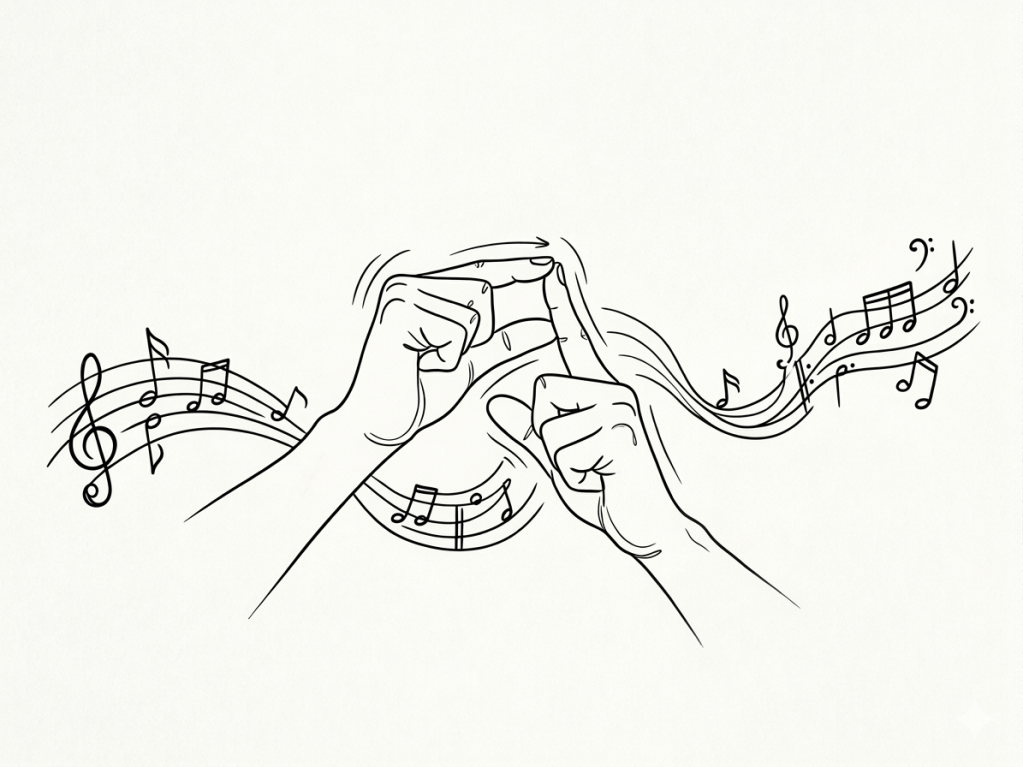
‘Amazing Grace’ is a timeless, beloved hymn sung in churches, at funerals and in sundry other settings. Even if you aren’t a church interpreter, you are likely to encounter this hymn at some point in your career. If you’ve never interpreted it before, or aren’t familiar with the lyrics, it could be a massive challenge.
This hymn was written by John Newton in 1772 as a poem and published in 1779 (except for the 7th verse, which has no known author and was published in 1829). It was later set to the tune with which we still sing it today. (1)
It took Newton many years to come to saving faith in Christ, years in which he faced many ‘dangers, toils, and snares’, which shaped his life and led him into the slave trade. Later, however, he spoke against the trade and worked for the abolition of slavery in England with William Wilberforce.
The first three verses of ‘Amazing Grace’ give us a brief glimpse of John Newton’s life before and through his salvation, and the rest gives us a view of the Christian life and our future after death. While the Christian life is not free from difficulties, we know that we can rely on Jesus, in whom we’ve placed our trust.
The first verse is relatively straightforward. It compares salvation to having been lost, then found or blind, but given sight. Role shifting would be appropriate here. Think about the word grace and whether or not the sign we generally use for that word is fitting. The definition Christians use for this word is something like: ‘the freely given, unmerited favor and love of God.’ (2) The usual sign doesn’t really convey this concept. If you have the time and flexibility in your interpretation, I would encourage you to find another way to express this idea. This is something I’m still working on myself!
In the second verse, I would again try to think of a more meaningful way to convey the concept of ‘grace’. The word ‘fear’ is used twice within the first two lines; the first is not the idea of being afraid, but rather awe and reverence of God, while the second line is about grace calming one’s fears. For the second half of the verse, if you are a believer, think about your own salvation: how did you feel when you first recognized the wonder of God’s grace to us? Or if you came to faith very young, consider a time that you came to recognize God’s astounding grace. The sign we usually associate with the word ‘appear’ might not be appropriate for this concept.
The third verse highlights God’s continuing grace in the believer’s life, whatever trials and difficulties we encounter. Some appropriate concepts could be: life experiences, struggles, challenges, sin. The second half of the verse emphasizes that it is only through God’s grace (there’s that concept again!) that we can safely come through all of the vagaries of life and find our ultimate rest in heaven.
The fourth verse seems to refer to Romans 8.28, which says: ‘And we know that for those who love God all things work together for good, for those who are called according to his purpose’ (ESV). This doesn’t mean that Christians will never experience difficulties! Just look at Paul’s life, who wrote the passage, and John Newton’s, who wrote the song. But we can have confidence that whatever happens to us, there is a purpose, even if we can’t see it at the time, and that God is with us and protects us and provides for us. All of these concepts should help you interpret this verse.
I had never heard the next verse before, but it contains beautiful imagery of the end of a believer’s life. That ‘yea’ at the beginning means yes, not yay. ‘Within the veil’ refers to dying and entering heaven. This verse gives the interpreter an opportunity to set up a beautiful visual representation with a good use of space. Don’t be afraid to reach above your head to reference heaven! As someone who used to greatly struggle with using more of my signing space, I understand that it can be difficult to open up more, but it is worth it and makes your interpretation so much more understandable when it’s not all crammed into a tiny box in front of you (unless there are specific restrictions needed by the person/people for whom you interpret).
The sixth verse was also less familiar to me. I believe the first time I heard it was in the modernized version of the hymn with the added chorus, which I will also address as it is so popular and used in many churches. This verse has been a struggle for me in the past, and I believe I have frequently interpreted it fairly literally, which isn’t necessarily wrong. But perhaps being a little more general would fit better – referencing the earth as it is ending, but not necessarily with ‘dissolving’, the sun ceasing to shine, etc. The latter half is a little easier – God calls us while we are here on earth and we are forever His, and He ours.
The final verse is my favorite. You don’t have to use the specific number ten thousand. It’s referencing that believers will be praising God forever from the moment we enter heaven. Make sure you don’t use the sign that indicates eternity past and future, as that should only reference God. He has always been (eternity past) and always will be (eternity future), but humans are finite while on earth and eternal only into the future. This is a mistake I’ve seen many church interpreters make, so take care.
Chris Tomlin added a chorus to the song in the early 2000s and added a new melody to some of the original verses. I enjoy both the original and modern versions, but some have a strong preference for one or the other. Still, to help interpreters in as many settings as possible, I’m including the new chorus below.
My chains are gone, I’ve been set free
My God, my Savior has ransomed me
And like a flood His mercy reigns
Unending love, amazing grace
The first two lines are fairly straightforward. In fact, I like to interpret the first line with just one sign. The last half could be a little trickier. Instead of using signs that would show an actual flood, perhaps a concept like ‘overwhelming’ or ‘powerful’ would be appropriate.
Every interpreter should have an idea of how to interpret this song as it is often used even in non-religious settings. If you don’t understand the idea of God’s grace, it is difficult to understand. Paul writes in Ephesians, ‘For by grace you have been saved through faith And this is not of your own doing; it is the gift of God, not a result of works, so that no one may boast.’ (ESV)
(1) https://www.loc.gov/collections/amazing-grace/articles-and-essays/creation-of-amazing-grace/
(2) https://www.dictionary.com/browse/grace


Leave a Reply